























ADVENDURE is the leading web portal in Greece about Mountain Running, Adventure, Endurance and other Mountain Sports



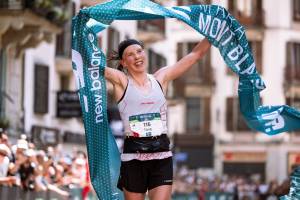
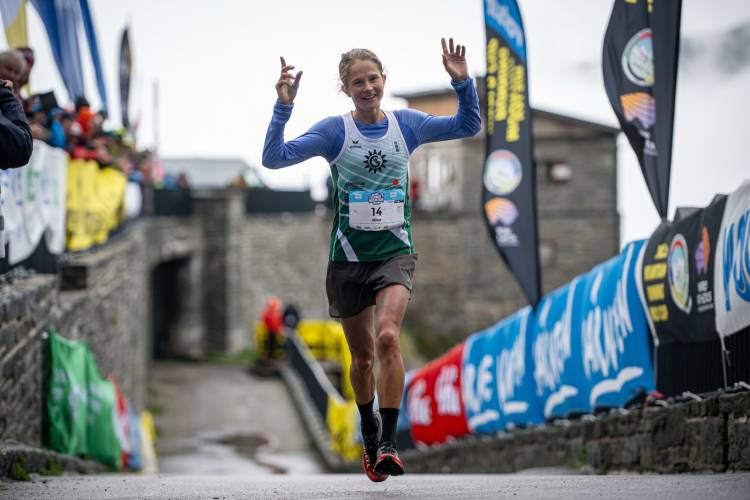 Nina Engelhard wins the Grossglockner Mountain Run 2024 Photo: WMRA Marco Gulberti
Classic mountain running returns to Heiligenblut
The WMRA World Cup reaches a key mid-season point this weekend with the Grossglockner Mountain Run, one of the classic mountain-running races on the international calendar.
Set in the heart of the Hohe Tauern, the race starts in the village of Heiligenblut and climbs towards one of the most recognisable mountain landscapes in Austria: the Grossglockner, the Pasterze glacier and the high alpine road leading towards the Kaiser-Franz-Josefs-Höhe.

The race forms part of the WMRA World Cup’s Classic Up & Down category, officially sponsored by Turismo Centro de Portugal “MOVE Centro de Portugal – The Sports Region.” After the opening block of races in Portugal, China, Spain and the United States, Grossglockner brings the World Cup to Austria for a race that could have a real impact on the standings.
After several weeks of very hot temperatures across much of Europe, race-day conditions are expected to be gentler, with less extreme heat than in recent weeks. Even so, Grossglockner remains a high mountain race, where temperature, wind and cloud cover can all influence pacing and race decisions.
A race with tradition and character
The Grossglockner Mountain Run has long held a special place in mountain running. Its identity is simple and powerful: a point-to-point climb from Heiligenblut towards the glacier region below Austria’s highest mountain.
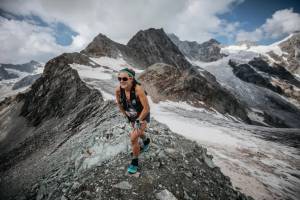
The course is 13.3km long with 1300m of climbing, passing from the village and valley environment into forests, alpine terrain and the protected landscape of the Hohe Tauern National Park. The route takes athletes towards the Pasterze, the longest glacier in the Eastern Alps, before the final push to the Kaiser-Franz-Josefs-Höhe.
That finish is part of the race’s character. After more than 13km of climbing, the final ascent includes the famous 522 steps to the line, a brutal and memorable ending that has helped make Grossglockner one of the races athletes remember long after the result is written.
It is also a race that rewards experience. The gradients, the altitude, the changing surface and the final section demand more than raw speed. Pacing, patience and the ability to keep climbing when the mountain starts to bite are all essential.

Grossglockner Mountain Run 2024 - Photo: WMRA Marco Gulberti
The World Cup picture reaches halfway
Grossglockner is the eighth race of the 2026 WMRA World Cup season, coming at a point where the overall standings are no longer only taking shape, but beginning to matter.
In the men’s standings, Philemon Kiriago (KEN) currently leads with 178 points, ahead of Michael Saoli (KEN) on 129 points and Andrew Douglas (GBR) on 100 points. Isacco Costa (ITA) follows with 92, while Patrick Kipngeno (KEN) and Richard Atuya (KEN) are level on 86.

From the elite start list for Grossglockner, several athletes with direct World Cup relevance are present. Michael Saoli (KEN), currently second in the standings, has the chance to put pressure on the overall lead. Richard Atuya (KEN), joint fifth, is also in the field and can strengthen his position with another strong performance. Luca Merli (ITA), eighth in the standings with 76 points, is another athlete who can use Grossglockner to move closer to the front group.
The men’s elite field also includes several proven mountain-running names, among them Ephantus Mwangi Njeri (KEN), Elijah Kamau Kariuki (KEN), Josphat Tuei (KEN), Tiziano Moia (ITA), Manuel Innerhofer (AUT), Hans-Peter Innerhofer (AUT), Christof Hochenwarter (AUT), Lorenzo Cagnati (ITA), Lukas Ehrle (GER) and Zak Hanna (IRL).
With a course as specific as Grossglockner, current World Cup position will matter, but so will experience, pacing and the ability to handle a long climb in changing mountain conditions.
Gitonga has a chance to close the gap
The women’s World Cup standings are led by Joyce Njeru (KEN), who has built a commanding advantage with 262 points. Behind her, Ruth Gitonga (KEN) sits second with 136 points, while Camilla Magliano (ITA) is third with 124.
Grossglockner could become an important race for the chasing group. Based on the elite start list, Ruth Gitonga (KEN) is one of the biggest names on the start line and has the opportunity to reduce the gap at the top of the standings. With the race coming at the midway point of the season, a strong result in Austria would keep the women’s World Cup battle alive heading into the second half of the calendar.
There is also significant depth behind her. Nélie Clément (FRA), currently fifth in the standings with 87 points, is listed for Grossglockner and can continue her consistent World Cup campaign. Benedetta Broggi (ITA), eighth with 85 points, Kirsty Skye Dickson (GBR), tenth with 78, Ingrid Mutter (ROU), 13th with 65, and Moana Lilly Kehres (ESP), 14th with 61, are also among the ranked athletes who can use this race to move up.
The women’s elite field also includes Gloria Chebet (KEN), Miriam Chepkirui (KEN), Jedidah Chepkemoi Sang (KEN), Arianna Dentis (ITA), Anna Hofer (ITA), Martina Falchetti (ITA), Ellen Crombie (GBR), Selina Burch (SUI) and Lara Hamilton (AUS), giving the race a strong international field beyond the current standings alone.

A course that can change the race quickly
Grossglockner may be a classic climb, but it is not one-dimensional. The first kilometres can feel controlled, but the race becomes progressively more demanding as the route climbs from the valley towards the glacier region.
The athletes will pass through changing terrain, from rural and forested sections to the higher alpine environment. That transition is part of what makes the race special. The course rewards athletes who can manage rhythm well as the terrain and conditions change through the climb. The final section to Kaiser-Franz-Josefs-Höhe is often where gaps open decisively. The 522 steps at the end leave very little room to hide. By then, the strongest athletes will already have made their move, but the final minutes can still decide places, points and momentum in the World Cup standings.

Austria as a turning point
With the season now reaching its midpoint, Grossglockner is more than another race on the calendar. It is a chance for the current leaders to defend their position, for the chasing athletes to close the gap, and for specialists in classic mountain running to make a statement.
For the men, the presence of Michael Saoli (KEN) and Richard Atuya (KEN) makes the race especially important in the context of the World Cup standings. For the women, Ruth Gitonga (KEN) has the opportunity to make a major move, while athletes such as Nélie Clément (FRA), Benedetta Broggi (ITA) and Kirsty Skye Dickson (GBR) can strengthen their place inside the top ten.
Grossglockner arrives at an important moment in the 2026 WMRA World Cup season. With the standings beginning to take shape, the Austrian classic offers an opportunity for the current leaders to strengthen their position and for the chasing athletes to gain ground. On a course with long climbs, changing terrain and a demanding finish, the race should offer a clear picture of where the World Cup battle stands heading into the second half of the season.
IN MOUNTAIN RUNNING WE TRUST.
About the WMRA:
Formed in 1984, World Mountain Running Association is the global governing body for mountain running and has the goal of promoting mountain running for all ages and abilities.
As well as the World Cup, the WMRA organises Masters, U18 and area championships and in partnership with the World Athletics, ITRA and IAU to deliver the World Mountain and Trail Running Championships, with the last event held in CanfrancPirineos Spain in 2025. The WMRA also maintains the Mountain Running World Ranking, a system of points allocated to athletes based on the results in designated races.




ADVENDURE is the leading web portal in Greece about Mountain Running, Adventure, Endurance and other Mountain Sports