




















ADVENDURE is the leading web portal in Greece about Mountain Running, Adventure, Endurance and other Mountain Sports
info@advendure.com




We are very excited to publish today’s interview. And the reason is clear: we are speaking with Greg Vollet, whom we knew between 2010–2023 as Sport Marketing Manager at Salomon, but today, in addition to being the owner of VØLT Sport Agency, is the creator and director of the Golden Trail World Series, the series that has literally transformed the world of trail running on a global scale. From this interview, we learn a great deal from someone who belongs to a few group of people who genuinely shape the sport’s direction internationally. We discuss about the journey and goals of GTWS, the evolution of professional athletes’ compensation, the comparison with the UTMB® World Series, the possibility of trail running becoming an Olympic sport, developments in media and digital coverage, and his perspective on the commercialization of the sport. Of course, having already visited Greece four times — both as a manager and as an athlete — he also shares how a Greek race could be integrated into the GTWS and his thoughts on Greece in relation to our sport.

[Advendure]: Let's start with the inspiration behind the creation of the Golden Trail Series: what gap did it aim to fill in the world of trail running? Is it intended only for elite athletes or for the broader community as well?
[Greg Vollet]: When I created the Golden Trail Series in 2018, there was a clear gap in our sport: trail running was growing fast, but the "short and spectacular" side of the discipline didn't have a global, coherent stage. I wanted a series that was easy to follow, exciting to watch, and built around iconic races, something that could reveal trail running to a broader audience without losing its soul. It was never designed only for elites. Of course, the World Series showcases the very best athletes, but the races themselves are open, and the bigger goal is to celebrate the sport and inspire participation. The elite storylines are the engine, the community growth is the outcome.

[Advendure]: How has the GTS evolved from its first year until today? Have there been any significant changes in its philosophy or structure? And at what stage of its evolution is it currently?
[Greg Vollet]: The series has evolved a lot since year one. We started with a smaller calendar and a very "pure race" focus. Over time, we refined three things. First, the sport format: keeping races around a two-hour, TV-ready window, with steep climbs, technical descents, and high intensity. Second, the narrative structure: building a season that fans can follow like a championship, not a set of disconnected races. Third, the broadcast and global reach: step by step, moving from digital-first to full international television distribution.
The philosophy hasn't changed: make trail running as exciting as possible without losing its soul. Where are we now? I'd say GTWS has entered its maturity and scale phase: a stable set of authority races, an elite roster, a proven TV product, and now a new multi-year media engine to grow it further.

[Advendure]: Could we say that the current form of the GTS — with the “flower format” adopted by some of the series’ races, the focus on live and televised coverage worldwide, and the gathering of the top trail running athletes — serves as a precursor to the sport’s potential inclusion in the Olympic Games? There’s been a lot of discussion regarding a possible debut at the Brisbane Olympics in Australia. Is there any truth to that?
[Greg Vollet]: The "flower format" and the focus on live and televised racing are mainly about spectator experience, on site and on screen. It lets fans see the race multiple times, understand tactics, and feel closer to athletes.
Does that make GTWS an Olympic precursor? I wouldn't frame it that way. What GTWS proves is that trail running can be broadcast-ready and can attract new audiences, which helps the sport's global recognition.
On Brisbane 2032, there is real momentum and advocacy in the trail community to be part of the Games. But today, nothing is officially confirmed for the Olympic program. So I'd say the conversation is real, the decision is not made yet.

[Advendure]: What criteria have been used to select the 8 races that currently participate in the GTS? Is the series open to adding new races, or does it remain in its current form for now?
[Greg Vollet]: Selection is based on a mix of sporting credibility and platform potential. We look for iconic mountain terrain and a strong course identity, proven organizational quality and athlete experience, the ability to host an elite field safely and professionally, a clear fit with the GTWS format of intense, dynamic, TV-readable racing, and a real community footprint in its region.
We have eight races because it's the right number to keep the season coherent and top-level. We're open to evolution, but we don't add races just to add races. Any change must raise the level of the series, not dilute it.

[Advendure]: Is there really a trend toward limiting the National Series, or is that not entirely accurate? In the end, did that effort succeed?
[Greg Vollet]: The National Series were created to help local ecosystems grow and to give athletes a pathway into the World Series. In the early years we had GTNS in many countries, often with multiple races per country. The reality is that this model wasn't financially sustainable over time.
So we reshaped it into a clearer and more efficient pathway: in most countries we reduced the GTNS to a single key race, allowing athletes to qualify directly for the global GTNS/GTWS Final. That keeps the system strong, selective, and meaningful for both organizers and athletes.
Today, the National Series still exist mainly in Asia and Oceania, because these are priority development regions where Salomon wants to keep investing and accelerating trail growth.
[Advendure]: At the beginning of 2025, the strategic partnership between GTS and WBD Sports Europe was announced, and it now seems that trail running is on the verge of transformative changes worldwide. With the rumors of a possible acquisition of WB by Netflix, how do you think all of this will affect the evolution of the GTS and, more broadly, trail running on a global scale?
[Greg Vollet]: The WBD Sports Europe partnership, announced in 2025, is a major step because WBD brings world-class production, multi-market distribution, and a true sports media machine.
With any large media integration or market rumor, it's too early to predict exact operational effects. What I can say is this: whichever logo sits on the door, the strategic direction is the same, to make GTWS the most visible and credible short-distance trail championship in the world. If a bigger global platform eventually amplifies that reach, it could be positive for GTWS and for trail running overall, as long as we preserve the sport's authenticity.

[Advendure]: Regarding the prize money for race winners and the series overall, how do you view the evolution of compensation for elite/professional athletes today compared to the past, based on your experience as a manager at Salomon? Do you think that, at some point, it could reach the levels of marathon or track and field athletes?
[Greg Vollet]: Compared to 10–15 years ago, trail compensation has clearly improved, with more structure, more professional teams, and a real prize ecosystem. GTWS is part of that progression.
Will it reach marathon or track levels? Possibly for a small number of athletes and events, but trail is different. The economics aren't the same, and I don't think copying road running is the goal. The goal is to professionalize in a trail-appropriate way: fair prize money, real athlete support, and sustainable careers.
[Advendure]: Could the commercialization — with the massive presence of sponsors, prize money, and media coverage — affect the purity of the love for the mountains, as it existed in the original form of trail running?
[Greg Vollet]: It's a fair question, and we have to stay vigilant. But I don't believe commercialization automatically kills purity. What matters is how you commercialize. GTWS was built to keep the heart of trail running intact: respect for the mountains, real athletic challenge, and genuine storytelling, not artificial spectacle. If we do our job right, media and sponsors help more people fall in love with the sport rather than changing what it is.

[Advendure]: What is the cost for a race to join the GTS, and what benefits does it gain from participating?
[Greg Vollet]: There isn't a single "entry fee" number I can quote publicly, because every partnership is built case by case depending on production needs, rights, and local context. But the benefits are clear: a global elite field and increased sporting credibility, full international production and worldwide distribution, the GTWS marketing engine and digital amplification, stronger international participation, and long-term growth of the race's brand and community.
[Advendure]: GTS and the UTMB World Series: two sides of the same coin in the evolution of the sport, or a different approach in terms of distances and organization? Do you think they have similarities, how do they differ, and how do they contribute to the growth of trail running?
[Greg Vollet]: They're complementary, not competing clones. UTMB World Series focuses on long distances and major trail adventures, and has built a powerful global pathway for that format.
GTWS is about the short, high-intensity, TV-ready side of trail running, where speed, tactics, and head-to-head racing are central. Same sport, different expression. Together they help trail grow in two directions: participation dreams and elite spectacle.

[Advendure]: Could Greece ever host a race in the series, and what would be required to make that a reality?
[Greg Vollet]: Absolutely possible. Greece has real terrain, history, and trail passion. What would be required is an event with a clear identity and world-class organization, a course that fits the GTWS performance format, the ability to deliver a strong athlete experience and a broadcast footprint, and a local community ready to support long-term growth. If those ingredients line up, Greece deserves a place on the world stage.
[Advendure]: 2025 was an exceptionally exciting year for the GTS. What do you consider the most important for you personally? Are there two or three moments that stand out and are worth sharing, because they truly left a mark on you?
[Greg Vollet]: 2025 was special because it marked a turning point. Three moments stand out for me. First, the launch of the new global media partnership, seeing GTWS enter a new era. Second, the level of racing all season, the depth and competitiveness showed how far the sport has come. Third, watching our fan community grow, with more young fans, more engagement, and more people emotionally invested in athletes' stories.

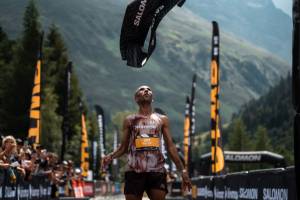
Greg Vollet .. in action!
[Advendure]: Greg, we’ll close the interview with a couple of personal questions. We first met you as Sport Marketing Manager at Salomon (2010–2023), then as Director of the Golden Trail World Series, and today as the owner of the sports marketing company VØLT Sport Agency. What are your feelings from this long and rich journey, and what are your plans for the future?
[Greg Vollet]: I feel grateful. I've spent most of my career building trail running, first inside Salomon, then through GTWS as a global platform.
What I'm proudest of is not one race or one athlete, but helping shape an ecosystem where performance, product innovation, media, and culture feed each other.
VØLT Sport Agency is the continuation of that mission: using everything I've learned to help brands and athletes build trail's next chapter, credibly, globally, and with respect for the sport.
[Advendure]: You’ve visited Greece several times in the past (Olympus mountain for Kilian's Quest, Loutraki for the Vertical Race, Kardamyli for the Salomon Advance Week, and Zagori as an athlete!) and I believe you have friends here. What would you like to say to the trail running community in our country who will read this interview?
[Greg Vollet]: Greece has always felt like a real trail country to me, with wild landscapes, a strong local spirit, and a genuine love for the mountains. I've had unforgettable memories there with athletes and friends.
What I want to say is simple: keep building your scene your way. Protect your mountain culture, keep welcoming new runners, and keep dreaming big. The global trail family is watching Greece with respect, and I hope we'll share more GTWS moments with you in the future.
Dimitrios Troupis
Photo copyright: GTWS, Justin Galant, Mathis Decroux

Κατάγεται από το Ξυλόκαστρο Κορινθίας και ζει μόνιμα στην Πάτρα. Συμμετείχε στην συντακτική ομάδα του Adventure Zone από το 2009, ενώ μαζί με τον Τάκη Τσογκαράκη ίδρυσαν και "τρέχουν" το Advendure. Το τρέξιμο στα μονοπάτια των βουνών και η μεταφορά εικόνων και συναισθημάτων μέσα από τα άρθρα του αποτελεί αναπόσπαστο κομμάτι της ζωής του. Παθιάζεται με τους αγώνες ορεινού τρεξίματος, υπεραντοχής και περιπέτειας. Έχει πολλές συμμετοχές και διακρίσεις σε αγώνες ορεινού τρεξίματος όλων των αποστάσεων, με έμφαση στους αγώνες ultra trail. Θεωρεί ότι το τρέξιμο και η πεζοπορία στη φύση είναι μια εσωτερική ανάγκη του ανθρώπου, μας φέρνει πιο κοντά σε αυτήν και μας κάνει να αγαπήσουμε περισσότερο το περιβάλλον.
Συνέντευξη στην ET1:
https://www.youtube.com/watch?v=3iyn3QmFlyE
Podcast "Γιατί Τρέχουμε" - s2 #09"
https://www.youtube.com/watch?v=2LTrKZ8PyWc
www.advendure.com





ADVENDURE is the leading web portal in Greece about Mountain Running, Adventure, Endurance and other Mountain Sports
info@advendure.com