























ADVENDURE is the leading web portal in Greece about Mountain Running, Adventure, Endurance and other Mountain Sports
info@advendure.com



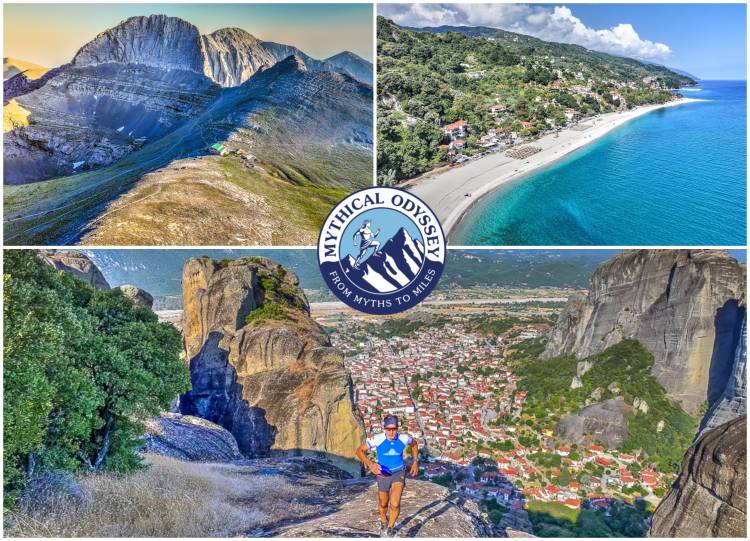
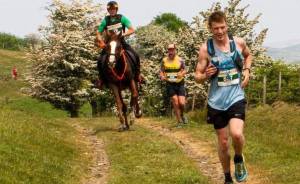
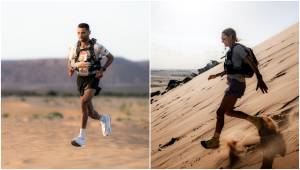
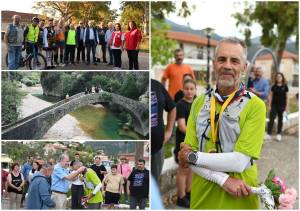
What can one even say about the “Flying Doctor,” Argyrios Papathanasopoulos? He is the only Greek athlete with such a rich background of experiences in iconic races all around the world: Western States Endurance Run, Leadville 100, Vibram Hong Kong 100, Lavaredo Ultra-Trail, Ecotrail de Paris, and many more, as well as demanding stage races in deserts like the Marathon des Sables, Atacama Crossing, and Namib Desert Challenge.
Argyrios has decided to transform this deep knowledge of multi-day races into an organizational vision. In September 2026, he is organizing the Mythical Odyssey, a six-day stage race that is much more than just a competition. It is an event where athletic performance is combined with rich cultural and qualitative experiences, unfolding across three iconic regions of Greece with completely different atmospheres: Meteora, Mount Olympus, and Pelion.
Advendure, with Nikos Kostopoulos, meets Argyrios for an in-depth conversation that sheds light on every aspect of the Mythical Odyssey.

[Nikos Kostopoulos]: How did the idea for an event like the Mythical Odyssey begin? What was the spark that pushed you to create the race?
[Argyrios Papathanasopoulos]: After participating in numerous races in the form of a stage race (in English terminology) or étape (in French), where athletes are required to cover a different course each day, I had the opportunity to meet many people who shared a common passion: exploring new places and cultures through running.
During the last race I took part in, in Spain in 2024, several people encouraged me to organize something similar in Greece. Over the past few years, our country has evolved into one of the most popular international destinations, and the absence of a comparable multi-day racing challenge sparked in me the serious consideration of this endeavor. Thus, I decided to try to leverage my many years of experience as an athlete, this time from the perspective of an organizer.
Ironically, just as I decided to move forward with organizing the race in April 2024, a few months later Racing The Planet — considered the “multinational” in the world of multi-day stage races, drawing hundreds of participants annually to its four races — announced that it would be holding a race in Greece for the first and last time.
Fortunately, the philosophy of that company is completely different from that of Mythical Odyssey. For this reason, their announcement in no way affected my final decision, which is based on a different vision and a different approach to organizing multi-day races.
For the record, that particular race took place last September, but it had the misfortune of coinciding with a strong low-pressure system, which brought rain, mud, and low temperature - conditions that certainly do not reflect the usual scenery and climate of our country.

[Nikos Kostopoulos]: Argyrios, we’d like you to introduce us to the organizing team.
[Argyrios Papathanasopoulos]: The organizing team of the Mythical Odyssey is made up of a small, flexible, and internationally experienced group of people, with substantial knowledge of multi-day races, mountain safety, and the local realities of the regions where the event takes place.
The contribution of my friend and brother Kostas Tsantos was pivotal. He is well known to the broader running community through his long-standing presence and races on the magical mountain of the Centaurs (Ultra Pelion Trail). He was the one who proposed and designed the courses in all three locations where the race is held, offering his many years of experience and playing a key role in solving numerous organizational challenges.
In more complex matters concerning race promotion, the shaping of each race day’s program, the selection of partners, and every new issue that arose as a challenge, the contribution of another close brotherly friend, George Lebesis, proved extremely valuable. We share many years of common journey, mutual respect, and a shared understanding of what a high-quality event truly means.
A central role in the team is held by my wife, Hannisze Yong, who for decades has accompanied me to dozens of races around the world and, through her photographic lens, has captured some of the planet’s most iconic events. In the Mythical Odyssey, she forms the organizational core of the race, being responsible for operational, functional, and communication management. She is actively involved in the most demanding aspect of daily communication with runners, hotels, restaurants, volunteers, and partners. At the same time, the race is supported by a wide network of local collaborators, volunteers, and mountain and medical professionals who ensure the safety, authenticity, and high quality of the overall experience.

[Nikos Kostopoulos]: A mountain running event is not just an athletic competition—it’s also a cultural one, highlighting the history, traditions, and identity of the region. Are there events such as music or dance performances, local product exhibitions, guided tours, or activities that connect participants with the local cultural heritage? Have you incorporated elements into the event that showcase the historical and mythological significance of the areas the race traverses? Do you believe it can function not only as a promotional tool but also as a way to promote a different, more sustainable form of tourism connected with sports, nature, and culture?
[Argyriοs Papathanasopoulos]: From its inception, the Mythical Odyssey was never designed as a simple mountain race. For us, running is the means, not the goal. The true objective is the meaningful connection between people and the landscape, history, and collective memory of the regions hosting the race.
For this reason, every course has been selected based on historical, mythological, and cultural criteria. Participants do not merely “pass through” Meteora, Mount Olympus, or Pelion; they move through places that for thousands of years have carried profound symbolism, reverence, myth, and human activity. This dimension is highlighted both through the storytelling of the race and the way we present each stage, each mountain, and each location.
The experience begins from the very first day. From the moment we welcome participants at the airport and transfer them to Meteora, the itinerary includes a stop at Thermopylae, with a visit to the archaeological site emphasizing the historical significance of the battle for the course of Western Civilization. The next day, we have organized a visit to two of Meteora’s monasteries with a specialized guide, who highlights not only the geological marvel of the area but also its deep spiritual significance over the centuries.
At the same time, we deliberately include elements that connect participants with local culture: regional products, gastronomic evenings, and experiences that showcase the hospitality and character of each region throughout the eight-day journey.
We are not interested in a “sterile” sporting event that comes and goes. The daily running challenge is the excuse to bring people from different countries closer to what we call Greek culture, history, and hospitality.
Within this framework, we firmly believe that the Mythical Odyssey can serve as a model for sustainable and high-quality tourism. Tourism that is not based on mass participation, but on duration, depth of experience, and meaning. Participants remain in the area for several days, move at gentle paces, engage meaningfully with nature and culture, and often return as travelers, not just athletes.
In simple terms, the Mythical Odyssey does not merely tell the story of a race. It unfolds a story. And through this story, it seeks to unite sports, nature, and culture into a shared, authentic experience.
For this very reason, the maximum number of participants is limited to 50 runners and their companions who wish to accompany them. Our focus is on the interaction of people from different parts of the world, the creation of bonds and memories, and the shaping of an unforgettable journey across Greece, highlighting three remarkably different locations with strong symbolic significance.

[Nikos Kostopoulos]: When we talk about the overall experience of a race, accommodation, transportation and food, play a major role for both athletes and their companions. Are there specific arrangements you can share regarding these aspects?
[Argyriοs Papathanasopoulos]: For a multi-day race like the Mythical Odyssey, we consider it self-evident that the experience does not end at the start or finish line. Accommodation, transportation, and food are equally critical, both for athletes and their companions.
That’s why we have designed the event so that participants can fully focus on the race without worrying about the practical day-to-day details. We provide organized transfers between stages, carefully selected accommodations near the start and finish areas, and complete nutrition tailored to the athletes’ needs, emphasizing quality, recovery, and local cuisine.
An athlete who rests in high-quality, aesthetically pleasing, and uniquely located accommodations, combined with meals rich in flavor and adapted to personal dietary preferences, will be able to enjoy their personal Odyssey and arrive at each new start line refreshed and ready.
It is also worth highlighting that the Mythical Odyssey is perhaps one of the first events of this kind to actively welcome the athletes’ companions, giving them the chance to share in the full experience. While athletes are competing, companions can follow the race from checkpoint locations, participate in organized visits to archaeological sites such as Dion, explore the picturesque villages of Pelion, or relax in the lush waters of Platamon, while the athletes test their strength on the demanding slopes of Mount Olympus.
Our goal is for everyone involved, directly or indirectly, to experience the Mythical Odyssey as a well-organized, safe, and meaningful journey—a journey where physical challenge coexists harmoniously with hospitality, comfort, and the authentic experience of the region.

[Nikos Kostopoulos]: We’d like you to give us a brief overview of the courses: how they were designed, their highlights in terms of scenic beauty, their level of difficulty, and which athletes they are best suited for.
[Argyriοs Papathanasopoulos]: The courses of the Mythical Odyssey have been designed with both aesthetics and variety in mind. Each location highlights a different aspect of the Greek landscape, offering a distinctive running experience and a deep sense of place.
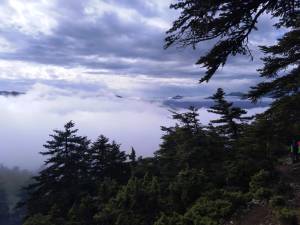
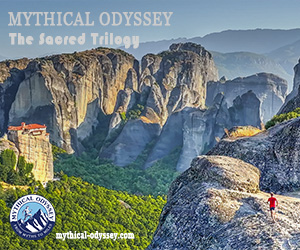
In Meteora, the routes wind among towering rock formations and forested landscapes, creating a strong sense of awe, isolation, and spiritual calm.
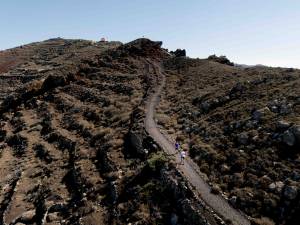
On Mount Olympus, the scenery becomes more alpine and dramatic, with significant elevation changes and almost constant visual contact with the peaks, offering one of the most intense and demanding experiences of the race.
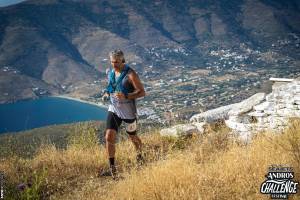
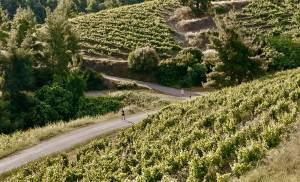
In Pelion, the running passes through dense forests, cobblestone paths, and traditional trails, where nature constantly intersects with human presence and the history of the region.
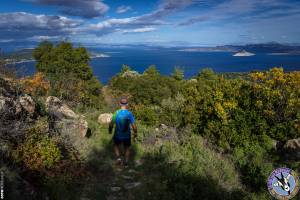
On the final day, athletes complete their Odyssey by finishing at one of the most beautiful beaches in Greece, after traversing the stunning mountains of Pelion. In my view, the image of an athlete, after six days of sustained effort and continuous challenges, taking a refreshing plunge into the crystalline waters of the Aegean, is the most powerful and symbolic moment of the entire race.
In terms of difficulty, the Mythical Odyssey is a demanding race, but it is designed with respect for the athlete. The courses are not technically extreme, yet they are intended for experienced trail runners who wish to test their endurance within a multi-day format.
The ascent of the “Mountain of the Gods,” Mount Olympus, represents the race’s greatest challenge, mainly due to the significant elevation gain. Throughout the routes, volunteers will be stationed at key points—not only to encourage athletes but also to ensure safety and the smooth running of the event.
Our goal is not to “punish” the athlete, but to challenge them. To have them finish tired, yet filled with images, experiences, and a profound sense that they have truly journeyed through running.

[Nikos Kostopoulos]: What advice would you give to athletes who are considering participating in a multi-day race for the first time?
[Argyriοs Papathanasopoulos]: My main advice for athletes thinking of taking part in a multi-day race for the first time is that the Mythical Odyssey is an ideal introduction to this race philosophy. It provides comfort, proper recovery, and carefully designed distances and moving times on the trails, without excessive daily demands.
In practice, most athletes will be able to complete the majority of race days in roughly four hours. This allows ample time for rest, recovery, and quality meals—factors that are crucial for the overall experience and for maintaining consistency throughout a multi-day event.
At the same time, athletes do not experience psychological fatigue along the route, as they are constantly running through some of the most beautiful trails the selected regions have to offer. The course markings are designed in an exemplary way to make navigation easy and eliminate the stress of getting lost, allowing participants to focus solely on running and enjoying the experience.
[Nikos Kostopoulos]: Do you think we might see top international athletes participating, or do you consider it difficult for a race in Greece to attract competitors of that level?
[Argyriοs Papathanasopoulos]: The Mythical Odyssey is deliberately aimed at a specific category of people: runners who love exploring new places through running. It attracts experienced athletes for whom competition serves as a catalyst for adventure, discovery, and shared moments—not as an end in itself.
Many will be surprised by the performances of certain participants, demonstrating that a long-term journey in the sport often brings maturity and remarkable endurance. This perfectly reflects the philosophy of the race: experience, consistency, and a timeless love for running, rather than pressure to achieve a result.
We have never aimed to create a race defined solely by performance. There are countless events already serving that purpose. In contrast, the Mythical Odyssey was designed as a journey through authentic landscapes and trails, intentionally removed from the mass-tourism experience.
The Mythical Odyssey offers a richer and more balanced experience, where running is combined with the place, the time, hospitality, and quality—prioritizing comfort, recovery, and top-level services for those seeking something deeper than just another finish line.

[Nikos Kostopoulos]: A major aspect of any mountain running race is the contribution of volunteers, who form the backbone of a successful race. How is this handled in your event? Do you believe there will be support from the local communities along the route?
[Argyriοs Papathanasopoulos]: Volunteers are indeed the backbone of every mountain race, and in the Mythical Odyssey, this is not just a statement—it is a fundamental reality. A multi-day mountain race cannot rely solely on infrastructure or professional services. It requires people with a willingness to contribute, a love for the region, and a deep understanding of nature and the needs of such an endeavor.
In our event, a small but flexible team of volunteers participates, both from abroad and from Greece, consisting of runner friends with extensive experience in mountain races and volunteer work. Their presence is not limited to operational support; they play a crucial role in creating the atmosphere of safety and trust that is essential in a multi-day race.
Due to the increased demands and the unique conditions on Mount Olympus, the human resources will be significantly strengthened, with a larger number of volunteers, mainly locals, who possess invaluable knowledge of the mountain and its trails.
Similarly, in Pelion, thanks to the long-standing presence and activity of Kostas Tsantos in the region, we have secured substantial and active support from the local community, as well as from partners who have been consistently involved in the area’s races over the years.
[Nikos Kostopoulos]: Mythical Odyssey Race will take place in mid-September 2026. Why did you choose this period?
[Argyrios Papathanasopoulos]: The choice of date was not random. It is a period that combines ideal conditions for mountain running while respecting both the athletes and the natural environment.
From a racing perspective, temperatures are milder compared to summer, which is especially important for a multi-day race with long distances and significant elevation gain. The mountains are more “friendly,” without extreme weather conditions, and daylight hours are sufficient for the safe completion of each stage.
At the same time, from an organizational and environmental standpoint, mid-September falls outside the peak tourist season. This reduces pressure on local infrastructure, facilitates the accommodation of participants, and allows a more harmonious coexistence of the race with local communities and nature.
Finally, for many athletes, this period represents an ideal moment in their annual training plan. They are in good competitive condition, without the physical and psychological fatigue that often comes at the end of the season.
Overall, mid-September offers the best balance between safety, quality of experience, and respect for the region. And for a race like the Mythical Odyssey, this balance is crucial.

[Nikos Kostopoulos]: How do you see the development of mountain running in Greece, and what elements or innovations could add value in the coming years?
[Argyrios Papathanasopoulos]: Mountain running in Greece is now clearly entering a phase of maturity. Participation has increased significantly, there is accumulated experience from previous events, and people with knowledge, passion, and vision are involved. At the same time, we are seeing qualitative evolution: greater emphasis on careful course design, safety, timely and accurate communication with athletes, and respect for the natural environment.
The real challenge for the future, however, is whether races can succeed not only in terms of athletic results, participation, or sponsorships, but also in establishing a meaningful connection with local communities. This is a particularly significant challenge, especially when considering the situation in much of rural Greece.
We are talking about a mountainous Greece that is slowly dying. Villages and areas are becoming deserted, and a “glamorous” weekend with hundreds of runners, impressive as it may be, is not enough on its own to reverse a difficult and uncertain future.
A race leaves nothing behind but photos and results if it does not create bonds, encourage return visits, foster continuity, and give people a reason to reconnect with the place—then it misses a unique opportunity. I truly believe that this is where the next step for mountain running in Greece will be determined.
[Nikos Kostopoulos]: Finally, would you like to share a thought or message with the mountain running community in light of our discussion? Do you have a message for the athletes and supporters of the sport that you would like to convey?
[Argyrios Papathanasopoulos]: I would like to say that mountain running is much more than time, performance, or ranking. It is a way of moving through nature with humility, of understanding our limits, and of respecting the land that hosts us.
To the athletes, my message is to continue running with curiosity and respect. Do not see the mountain as a field to conquer, but as a companion. Enjoy the route, the moments, the people around you—not just the results.
And to all who support the sport - volunteers, organizers, local communities - thank you. Without you, mountain running would have no soul. It is the collective effort that gives meaning to every race.
I hope that in the future we will see more events with identity, respect, and vision. And above all, a community that grows without losing the values that made it special from the very beginning.
Nikos Kostopoulos
 Αργύρης Παπαθανασόπουλος: Το Mythical Odyssey δεν αφηγείται απλώς έναν αγώνα. Αφηγείται μια ιστορία!
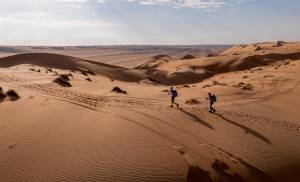 Oman Desert Marathon Stage 2: Moroccan Athletes Dominate as Course Tests Mental and Physical Limits!
 Adventure Races: The Ultimate Test of Endurance and Survival in Nature – The Experience from Norchaar 2025!





ADVENDURE is the leading web portal in Greece about Mountain Running, Adventure, Endurance and other Mountain Sports
info@advendure.com