



























ADVENDURE is the leading web portal in Greece about Mountain Running, Adventure, Endurance and other Mountain Sports
info@advendure.com



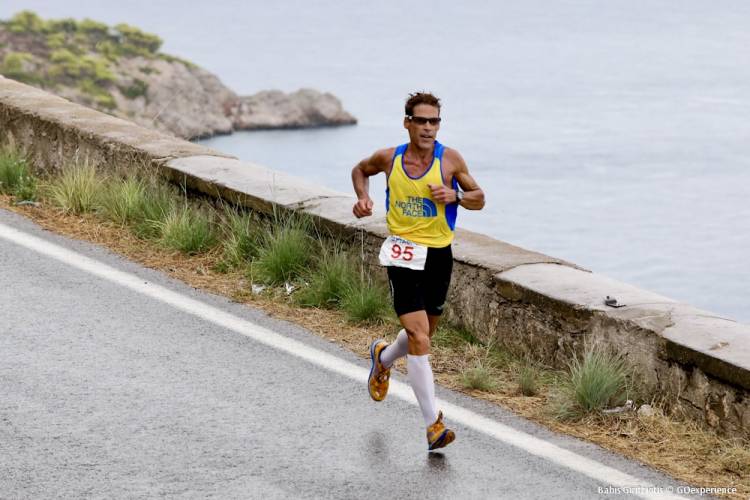 Dean, running Spartathlon
The Spartathlon is a race that does not need to construct its own legend, because the legend is already there!
It is there in the footsteps of Pheidippides, in the 246 kilometers from Athens to Sparta, in the mountains and roads of the Peloponnese, in the endless hours of effort endured by the athletes, and in the history that connects the ancient past with the modern-day ultrarunners.
Yet there is a paradox. The Spartathlon is the most historic ultramarathon on the planet, but it still has not achieved the place it deserves on the global stage. It does not enjoy the exposure, worldwide television coverage, or recognition of other major races. And above all, millions of people around the world still do not have the opportunity to experience live the fascinating and deeply moving spectacle unfolding from Athens to the statue of King Leonidas in Sparta, at a time when we can watch the battles of the world’s greatest athletes unfold live on our screens, whether in the mountains or on the roads, in every corner of the globe.
This is something that both the organizing team now running Spartathlon and Dean Karnazes want to change., having just taken on the role of Global Spartathlon Ambassador.
Twelve years after his first participation in the Spartathlon, Dean speaks to Advendure about his relationship with the race and with Greece, how things have changed since 2014, and, above all, his vision for its future.
At the heart of our conversation is an ambitious goal: a globally accessible livestream of the Spartathlon starting in 2027, which could bring the history, the course and the athletes of the race to the screens of millions of people around the world.
Dean also talks to us about UTMB, Western States, the growing global popularity of major ultra-trail races compared to road ultramarathons, this year’s event, and how he imagines the Spartathlon of 2030, if all these ideas become reality.
An interview about the past, the present, but above all, the future of this historic race!


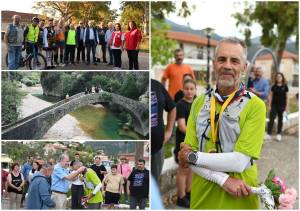
Dean, in 2014, arriving at the central aid station in Corinth, with me there to welcome him as his support!
[Advendure}: In 2014, you ran the Spartathlon for the first time and managed to reach Sparta in 34:45:27. I was part of your support team at the time, and I still have very strong and beautiful memories of that effort. If you close your eyes today and go back to those roughly 35 hours, what is the first image, moment, or feeling that comes to your mind?
[Dean Karnazes]: What I distinctly remember is coming into Corinth and having all of these Greek relatives of mine who I didn't even know existed waiting for me. It was both beautiful and overwhelming at the same time. I didn't know much about the course or Greece at the time, even though I am 100% Greek I had never spent much time in Greece. They were telling me they were my ξαδέρφια, θεία, θείος, and their friends and neighbours and they all wanted me to sign books and take pictures with them. And I'm in the midst of a race. It was crazy. At that point I said to myself, stop trying to be competitive and just enjoy the experience. It wasn't my best performance, but it was a race I will never forget.
[Advendure}: Your Spartathlon experience did not simply remain another finish in your career. Instead, it evolved into the remarkable book The Road to Sparta, through which you explored not only the race itself, but also the story of Pheidippides, the iconic Battle of Marathon, your Greek heritage, and your relationship with Greece. What was it, ultimately, that moved you so deeply about the Spartathlon that made you feel this was a story that needed to be told, that needed to become a book?
[Dean Karnazes]: My relationship with Greece is complicated. I didn't realize what being Greek meant until the Spartathlon. Then, suddenly, as if from a dream, I awoke to recognize how noble it is to be Greek. Our history is unlike any other, we have indelibly influenced the course of western civilization. And we are the founders of great sporting legacies, like the Olympics and the Marathon. Then it hit me, you must share this story with the world and not let it be forgotten.

"The Road to Spart" - The Book
[Advendure}: Twelve years have passed since your first participation, and you now live in Greece, with a very different and much deeper relationship with both the country and the Spartathlon. When you compare the race you experienced in 2014 with the Spartathlon of 2026, what do you see as having changed the most, and what would you never want to see change?
[Dean Karnazes]: The Spartathlon is singular. There is no other footrace like it in the world, nor can there ever be. The Spartathlon was ostensibly established in 490 BC. The modern race has maintained much of the mystique and lore and managed to keep the event authentic, not selling out to corporate sponsors and big advertisers. The race organizers have maintained a spirit of philoxenia, and the Spartathlon is loved the world over because of that.
But all of the race staff are volunteers and it is incredibly difficult staging the event every year. These people work tirelessly and it is exhausting.
My hope is to bring live broadcasting to the Spartathlon in 2027 and I am working with the race organisers to make this a reality. With livestreaming coverage the Spartathlon could generate much needed revenue for producing the event, while maintaining the race authenticity and character. And the live broadcast will showcase the best of Greece to a global audience.

Dean, running Spartathlon
[Advendure}: The Spartathlon has something that very few - if any - races in the world can offer: an extraordinary history, mythology, immense difficulty, a genuine historic route, and a unique connection with Greece. Yet, do you believe it currently has the place it truly deserves on the international ultrarunning calendar? And if not, what are the two or three things that need to change or evolve for the Spartathlon to gain, on a global level, the position it undoubtedly deserves?
[Dean Karnazes]: Sadly, the Spartathlon does not hold the prominence on the world stage it deserves. In fact, many ultrarunners barely know the race. The Spartathlon does not invite well-known athletes to the race like many other races do. And because there is no live event coverage, people don't know of it. To their credit, the Spartathlon organizers are making positive changes. The livestream will increase the race visibility tremendously, and they are appointing global athlete ambassadors, such as myself, to help elevate the race. I feel confident that the Spartathlon is about to experience a surge in popularity.

Dean, after finishing the Spartathlon 2014, under the statue of Leonidas
[Advendure}: The race organization has just announced that you are taking on the role of Global Spartathlon Ambassador, a role you described as something that "stirs my soul." What does that phrase really mean to you? And what would you like to achieve through your new role? Is there something specific you already have in mind as your first goal?
[Dean Karnazes]: Being a proud Greek (my grandfather was from a small village in the hills above Tripoli, and my grandmother was from the island of Ikaria) I liked to think I'm making my ancestors proud. Because I am one of the most recognisable runners in the world, I can use my global noterietay to promote the Spartathlon, and also Greece, in a shinning light. I also know my Greek history and give talks to runners around the world.
[Advendure}: You have told me that you remain very focused on bringing a world-class live streaming experience to the Spartathlon, but that it was not possible to secure the necessary funding this year, while you remain confident that 2027 will be different. What exactly have you envisioned? If we had the resources and could watch the Spartathlon in 2027 from anywhere in the world, what would you want that experience to look like for the viewer on their screen? Do you have examples of major races - such as UTMB and Western States Endurance Run - in mind?
[Dean Karnazes]: I am very familiar with live streaming and have watched the growth in popularity. Western States probably does the best job at the moment. My longtime friend, Billy Yang, produces the Western States livestream and one of his team members is coming to the Spartathlon this year to observe. Live coverage of races like Western States and UTMB have limitations. For one, they're mostly on remote mountainous terrain. So getting camera equipment and filming staff into these area is extremely difficult. And then the runners just flash by for a brief instant and then they are gone.
With the Spartathlon you have globally renowned landmarks, such as the Acropolis, Corinth and Sparta, and almost constant contact with the athletes. Filming up-close from a car or motorcycle is possible nearly the entire route. And the drone footage will be much more predictable and precise. I think eventually the Spartathlon livestream will become bigger than the race itself. It's not much different than the Olympics. Millions of people attend the Olympics live, but more than a billion people watch the broadcast.

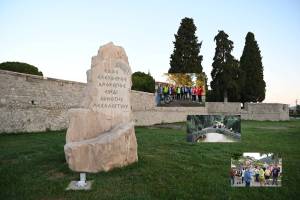
With the Honorary Presidents of the International Spartathlon Association, Mr. Panagiotis Tsiakiris and Mr. Kostis Papadimitriou
[Advendure}: We are now less than a month away from this year's Spartathlon, which will take place on September 26–27. How do you see this year's edition? And what exactly will your role be during those days? With Jo running this year, should we assume that you will be her support? Or will you also have other initiatives and activities planned in the days leading up to the race?
[Dean Karnazes]: This year I have several obligations. I put the Spartathlon race organizers in touch with the Badwater Ultramarathon race director (who is an old friend of mine). He will be attending the Spartathlon for the first time this year and I will be showing him around. Our hope is to somehow make the races partner events. We also have the Western States livestreaming team coming over for the first time and I will be working with them on filming locations and logistics. And I will be once again crewing for Jo Manta, who is returning to the Spartathlon (less than a year after giving birth!).

Dean, running in the "Death Valley", during Badwater Ultramarathon
[Advendure}: Over the past few years, races such as UTMB, Western States Endurance Run, Hardrock 100, Lavaredo Ultra Trail and other major ultra-trail events have gained enormous global popularity, extensive media coverage, significant prize money, and growing commercial power. Do you believe that mountain running ultra races are beginning to surpass traditional road ultramarathons in terms of prestige and appeal? And if so, why do you think this is happening?
[Dean Karnazes]: I predicted this would happen many years ago. The allure of trail running is too strong to ignore. Once you start running on trails you don't want to go back to the road. I foresee this trend continuing. The growth in Asia is staggering, and it's only just begun. The challenge is to keep the grassroots appeal. Races like UTMB, and even Western States, feel too commercial to me. Some of the magic is lost when this happens.

Dean has just finished the Western States Endurance Run
[Advendure}: You have covered hundreds of thousands of miles, raced some of the most iconic events in the world, and now see ultrarunning from a completely different perspective. If you could go back to the Dean who was standing on the starting line of the Spartathlon in 2014 and give him just one piece of advice, what would you tell him?
[Dean Karnazes]: I would tell him to invest in Bitcoin. HA! That's a joke, of course. I would tell him to put on more sunscreen or wear a hat. As you get older you realize that bronze skin of yesteryear comes at a price. Other than that, maybe run fewer road races. Although I'm an ultrarunner and trail runner, I have run hundreds of traditional marathons all over the world. Maybe all those kilometres on the road were tough on the body. Still, I love it so!
[Advendure}: I would like to finish by looking ahead. If you were given the opportunity to design the Spartathlon of 2030 without any limitations in terms of money or resources - while keeping the history, the route, and the soul of the race completely untouched - what would you want it to look like? And what position would you like the Spartathlon to hold on the global map of ultradistance races by then?
[Dean Karnazes]: That would be a dream. First off, I would develop a clear plan for live broadcasting in multiple languages. If you look at the broadcasting of Ironman Championships in Kona, that would be my model. They do a great job. Then I would develop a plan for community engagement along the route. To get the local people to rally around the Spartathlon and line the streets cheering for the racers, like the NYC Marathon. Lastly, I would use some of the revenue from the livestream to help the rural communities the race course passes through. Medical care for the elderly, educational programs for the youth, and physical education for all to encourage a healthier lifestyle. The Spartathlon has the potential to do so much good for Greece, and the newer leaders of the race have a bigger vision and broader perspective. When the Greeks work together, instead of fighting against each other, we are unstoppable. I am very hopeful that by 2030 all of these things can be accomplished, and I won't sleep until they are!
Dimitrios Troupis

Κατάγεται από το Ξυλόκαστρο Κορινθίας και ζει μόνιμα στην Πάτρα. Συμμετείχε στην συντακτική ομάδα του Adventure Zone από το 2009, ενώ μαζί με τον Τάκη Τσογκαράκη ίδρυσαν και "τρέχουν" το Advendure. Το τρέξιμο στα μονοπάτια των βουνών και η μεταφορά εικόνων και συναισθημάτων μέσα από τα άρθρα του αποτελεί αναπόσπαστο κομμάτι της ζωής του. Παθιάζεται με τους αγώνες ορεινού τρεξίματος, υπεραντοχής και περιπέτειας. Έχει πολλές συμμετοχές και διακρίσεις σε αγώνες ορεινού τρεξίματος όλων των αποστάσεων, με έμφαση στους αγώνες ultra trail. Θεωρεί ότι το τρέξιμο και η πεζοπορία στη φύση είναι μια εσωτερική ανάγκη του ανθρώπου, μας φέρνει πιο κοντά σε αυτήν και μας κάνει να αγαπήσουμε περισσότερο το περιβάλλον.
Συνέντευξη στην ET1:
https://www.youtube.com/watch?v=3iyn3QmFlyE
Podcast "Γιατί Τρέχουμε" - s2 #09"
https://www.youtube.com/watch?v=2LTrKZ8PyWc
www.advendure.com 44ο Σπάρταθλον: Ο Ούγγρος Tamás Bódis ξανά στην κορυφή, με εκπληκτικό ρεκόρ διαδρομής! Νικήτρια στις γυναίκες η Δέσποινα Σημαντράκου!
 Από την Αθήνα στη Σπάρτη και από εκεί, στον κόσμο: Το όραμα του Dean Karnazes για το Σπάρταθλον!
 Μονοπάτια και κουλτούρα του trail running σε Καλιφόρνια και Ελλάδα: Η εμπειρία της Jo Manta και του Dean Karnazes από τα Mammoth Lakes!









ADVENDURE is the leading web portal in Greece about Mountain Running, Adventure, Endurance and other Mountain Sports
info@advendure.com